
The 37th Oxford International Women’s Festival
Celebrating
Women’s Achievements
7—14 March 2026
Join us for a week of events, in venues across Oxford.
The annual Oxford International Women’s Festival returns to provide a variety of events to celebrate women’s lives. Since Oxford International Women’s Festival began in 1989, it has focused on Women’s International Day, March 8th . This is the day when women throughout the world celebrate women’s struggles for political , trade union and employment rights. The Festival has always covered a range of topics from arts to the sciences as well as women’s creativity and initiated campaigns for women’s rights As usual the Festival is organised by local women, representing a wide range of backgrounds and experiences. Thank you everyone for your support. – Christine Eady and Deborah Hollingsworth and Katherine Bradley.
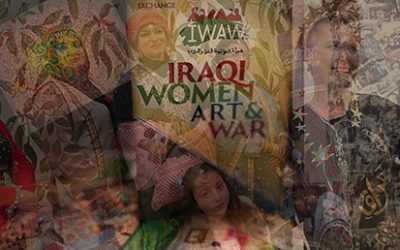
Women Weaving Stories Through Sustainable Fashion
Thursday 5th February – Monday 15th June 11.00am-5.00pm
An exhibition celebrating women’s creativity across cultures. Sustainable fashion through mixed-media storytelling.
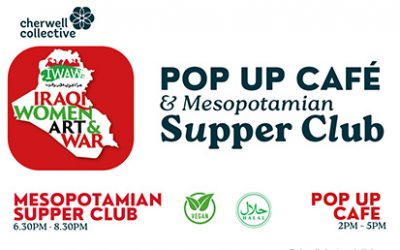
Pop Up Café & Mesopotamian Supper club (KIDLINGTON)
Saturday 7th March 2.00-5.00pm & 6.30-8.30pm
Enjoy light Iraqi dishes at our cafe or in the evening join us for a three-course feast celebrating the flavours of the ancient Middle East.
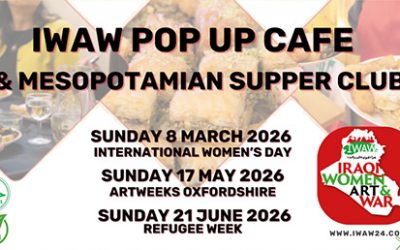
Pop Up Café & Mesopotamian Supper club (WOODSTOCK)
Sunday 8th March 2.00-5pm & 6.30-8.30pm
Enjoy light Iraqi dishes at our cafe or in the evening join us for a three-course feast celebrating the flavours of the ancient Middle East.

International Women’s Day celebration & FILM Olive Gibbs
Monday 9th March 7.00-9.30pm
The evening will begin at 7pm with the film which will be followed by a Q&A with the filmmakers and the historian, Liz Woolley. This will be followed with light refreshments and music, and a discussion on why we should celebrate women’s lives.
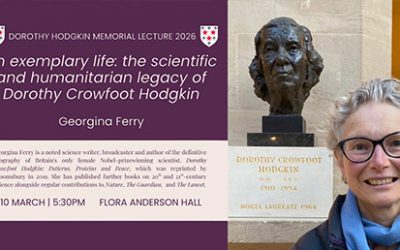
Dorothy Hodgkin Memorial Lecture
Tuesday 10th March 5.30pm
This lecture commemorates 81 years since Dorothy Hodgkin’s groundbreaking determination of Penicillin’s structure.
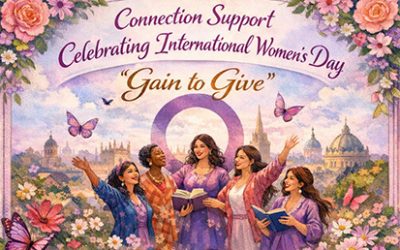
Gain to Give
Wednesday 11th March 10.00am-2.30pm
Join us for singing, dancing, storytelling & creative workshops.
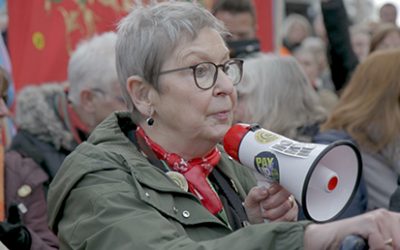
Iron Lady
Saturday 14th March 2.30pm
This is the inspiring story of working-class women who stepped into leadership during the 1984–85 Miners’ Strike.